What is content repurposing?
Content repurposing is taking one piece of content or source material and adapting it into multiple new posts or formats, so one idea reaches more people in more ways. It is not spamming the same thing everywhere.
Three terms get mixed up, so let me separate them cleanly:
- Repurpose: adapt or transform content into something new (a blog becomes a carousel, a webinar becomes a series of text posts).
- Repost / reshare: publish the same content again, yours or someone else's.
- Cross-post: publish the same content on multiple platforms at once.
This guide is about repurposing, the first one, because it is where the real reach lives. Reposting has its place (more on that below), but adapting one idea into several genuinely new posts is what keeps you visible without inventing everything from scratch.
The two kinds of repurposing: reformat vs. source-mining
There are two kinds of repurposing, and most people only do the first. Knowing the difference is the whole game.
- Reformat means taking content you have already published and changing its shape. A blog becomes a carousel. A newsletter becomes a text series. A report becomes a set of stat graphics. Useful, and it is what every guide covers.
- Source-mining means taking the raw, unpublished material you already generate and turning it into posts. Your sales and discovery calls, webinars, podcasts, recorded talks, meeting notes, and the questions clients ask you every week are all content. It is just not written down yet. This is the bigger and mostly untapped opportunity, and the posts are better, because they come out in your real voice and cover what you actually think.
You are sitting on far more content than you realize. Do not take my word for it. Alex Vacca, co-founder of ColdIQ, a B2B GTM agency, put it exactly right: "You don't need to reinvent the wheel. Just documenting what happens inside the company already gives you a lot of content ideas." His team turned day-to-day work into a steady content engine, without ever staring at a blank page.
How to turn one source into a month of posts
You can turn a single long asset into eight to twelve posts by pulling out its distinct ideas and shaping each into its own post. One 40-minute webinar holds a month of content. Here is the workflow.
- Start with one source. A webinar, a podcast episode, a client call, or a recorded talk.
- Pull the distinct moments. Every strong idea, story, statistic, and quotable line is a separate post. A 40-minute session usually has ten or more.
- Shape each into a post. One becomes a lesson, one a contrarian take, one a mini-case, one a how-to, one a myth to bust.
- Vary the format. Turn the meatiest idea into a carousel, a punchy line into a text post, a clip into native video.
A worked example: say you run a webinar on B2B onboarding. The opening story becomes an origin post. The framework you taught becomes a carousel. The audience question you answered becomes a client-question post. The one strong opinion you dropped becomes a POV post. That is four posts from one hour, before you even reach the quotable one-liners.
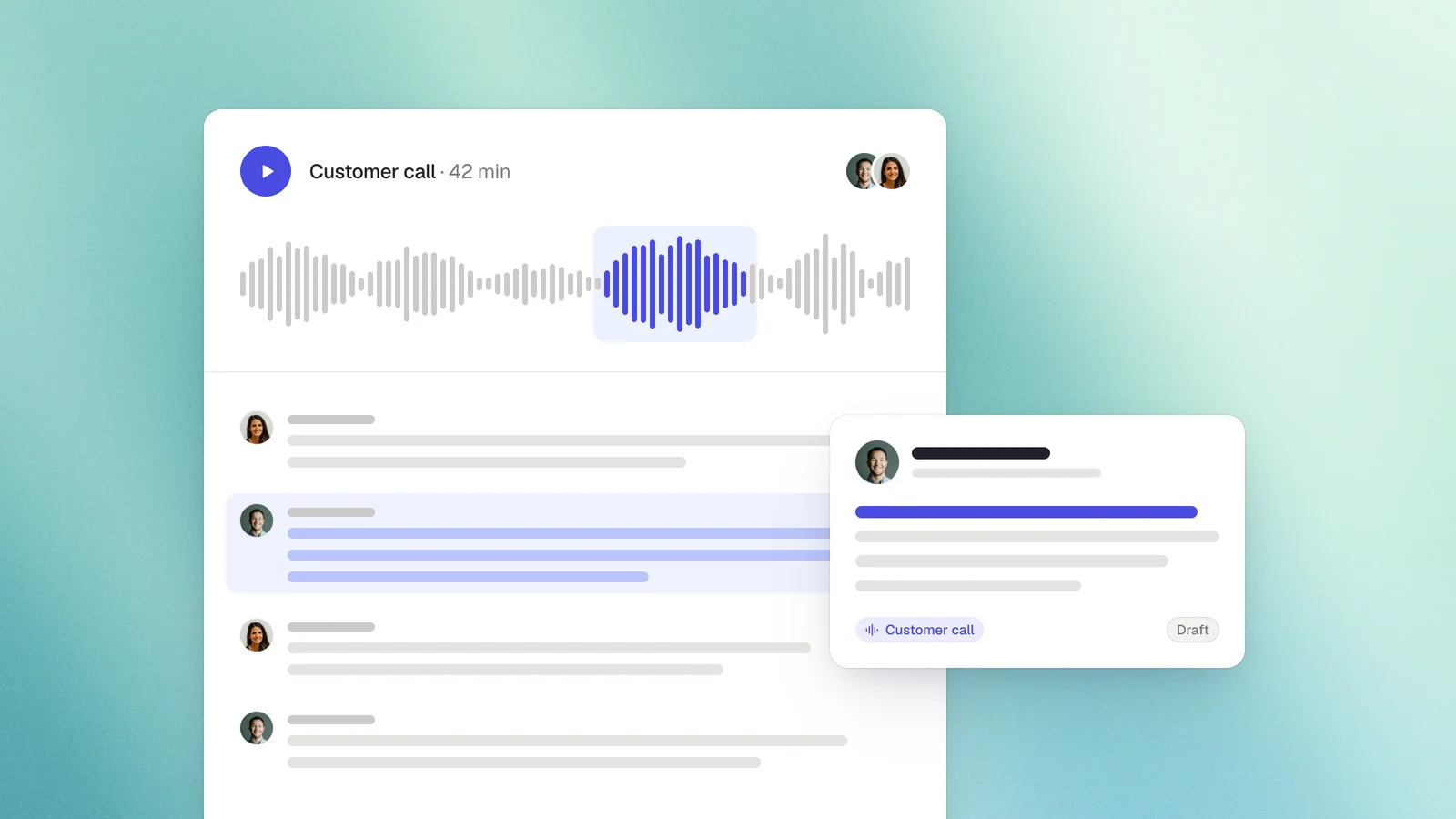
This is exactly how Philipp Trentmann, CEO of HASE + CO, works. He records a voice note after a meeting and it becomes a draft, so a passing conversation turns into a finished post. That is source-mining in its simplest form. If you want the workflow at scale, Scripe's Sources lets you upload a call, webinar, podcast, YouTube video, or document and get ranked post drafts from it, flagging which ideas are most likely to land, so you choose from real options instead of a blank page.
Quick wins: ways to repurpose content for LinkedIn
The fastest repurposing wins take content you already have and reshape it in minutes. Here are the proven moves:
- Turn a blog or newsletter into a carousel or a text series.
- Clip a video or webinar into short native clips.
- Turn your answer to a comment question into a standalone post.
- Refresh and re-share a past top performer (more on that next).
- Turn a recurring client FAQ or objection into a post.
- Pull a single stat or quote into a simple graphic.
Pick one this week and you will see how quickly the backlog of "content you already made" adds up.
Can you repost old content?
Yes, you can repost old content on LinkedIn, and it is not penalized as duplicate content the way people fear. That fear is mostly a myth. LinkedIn does not punish you for reusing your own material, and platforms do not cross-check each other for duplicates. What matters is how you do it.
Repost well by refreshing rather than pasting. Give a past top performer a new hook, add a lesson or update you have learned since, or switch the format from text to carousel. Space it out: a couple of weeks between reruns of the same idea is plenty, and carousels can return sooner than long articles.
If you notice LinkedIn resurfacing one of your old posts in the feed, that is usually because it picked up fresh engagement, which revives its reach. One honest 2026 note: what LinkedIn does actively suppress now is comment-baiting like "comment YES if you agree," not reposting, so refresh your best work freely and skip the engagement tricks.
A repurposing system for teams and agencies
A team repurposing system is one source in, many posts out, across several profiles, with a consistent process. Doing it ad hoc does not scale: quality drifts, nobody owns it, and people run dry. A real pipeline has four repeatable steps: capture the source, generate the drafts, review and approve, then schedule across accounts.
This is where source-mining becomes an operating advantage. An agency can turn one client call into a week of that client's posts, in that client's voice, without asking the client to write anything. ColdIQ scaled exactly this kind of system across more than 20 team members, and now attributes roughly 80% of its deals to LinkedIn. With Scripe you upload the call or asset, generate drafts, keep each profile's distinct voice, and manage every account in one place.
How to repurpose with AI
AI makes it easy to turn one asset into twenty posts, which is exactly why so much repurposed content now sounds like nobody. Volume is not the hard part anymore. Voice is. Buyers can spot a reworded blog with the personality stripped out, and they scroll right past it. The goal is to repurpose at volume while every post still sounds like you.
This is where a general chatbot and a purpose-built tool part ways, so I will be specific since this is our blog. A general model can reword a webinar transcript, but it does not know your voice, and it cannot post to LinkedIn, tag profiles, or measure what happened afterward, because those need official access.
Scripe learns a distinct voice per profile from your real posts and improves from official LinkedIn performance data, so the posts it drafts from your source material sound like you, and it ranks which ones are most likely to land. I will be honest about the limits too: our strength is text and analytics, not polished AI images or video.
Never face a blank page again
Repurposing is the difference between running dry and always having something worth posting. The content is already there, in your calls, your webinars, and the things you say every week. The only real question is whether it gets captured and shaped, or slips away.
That is what we built Scripe to do: upload a call, webinar, or podcast, get ranked drafts in your own voice, and keep posting consistently without inventing every idea from scratch.
If you want to get far more from the work you already do, see how Scripe works
Start a Free TrialFAQs

Head of Growth
Nicolle Sophie is Head of Growth at Scripe, where she leads creator and partnership strategy, drawing on cross-disciplinary expertise in influencer marketing, content strategy, automation, and AI. She has built her career at the intersection of these fields, giving her a versatile, full-picture approach to growth that few specialists can match.
LinkedIn