What is social selling?
Social selling is the practice of using social platforms to find, research, engage, and build relationships with potential buyers, so that when they are ready to buy, you are the trusted, familiar option. It is not cold pitching in a new venue. It replaces the interruption of traditional prospecting with presence: sharing useful content, listening for buying signals, and earning trust before any pitch. Done well, it turns patient relationship building into a durable engine for lead generation, shortening the distance between a stranger and a conversation by making you a known, credible resource in your space.
Social selling vs. social media arketing, social commerce, and influencer marketing
These get conflated, so here is the clean split. Social media marketing builds brand awareness to a broad audience from a brand account. Social commerce is transacting directly inside a platform (checkout on TikTok Shop or Instagram). Influencer marketing pays a third party to promote you. Social selling is the one-to-one and one-to-few work an individual seller does to build relationships and pipeline. They overlap, but the job is different: social selling is about relationship building, not reach.
Why social selling matters
The reason to take social selling seriously is that the buying process changed underneath sales. Buyers now self-educate long before they talk to a rep, and by the time they do, the decision is often mostly made. Buyers arrive to validate, not to explore. The average buying group now evaluates about five vendors and already has direct experience with four of them, so your real job is to be the fifth they already know and trust, well before the evaluation begins.
Most of that journey is invisible. It happens in the "dark social" of feeds, DMs, private communities, and peer conversations that no tracking sees. Social selling's real job is to be present and trusted during that invisible research phase, so you make it to the shortlist.
The 4 pillars of social selling
Nearly every framework, including LinkedIn's Social Selling Index, rests on the same four pillars. They are sound, as long as you read them through a value-first, signal-driven lens:
- Establish your professional brand. Show up as a credible resource, not a resume. Your professional brand and personal branding are the silent variable in every reply.
- Find the right people. Target by fit and, more importantly, by intent signals rather than a broad list.
- Engage with insights. Add genuine value in public before you ever ask for anything.
- Build relationships. Building relationships is the actual work, so nurture relationships patiently; the pitch is the smallest part of it.
These four map directly to how LinkedIn scores its SSI, which is useful context, though as you will see below, SSI is a leading indicator, not the goal.
Precision over volume
Here is the single most important shift in social selling, and it is not a trend: the spray-and-pray era is over, because it now actively works against you.
First, platforms detect spam and punish it. LinkedIn caps most accounts near 100 connection requests a week, and when your acceptance rate drops, LinkedIn quietly reduces your sending capacity, so high-volume, low-relevance outreach throttles itself. Second, buyers tune it out: a typical B2B decision-maker already receives enough cold connections and one more generic message disappears.
This is also where authenticity becomes a hard constraint, not a soft value. Buyers now spot a cloned, scripted message instantly, and a fake-personalized "I loved your post" opener does more damage than no message at all. Precision without sincerity is just faster spam.
How to use AI in social selling (without becoming spam)
AI is the biggest force multiplier social selling has ever had, and the fastest way to ruin your reputation, depending entirely on where you point it.
Point it at research and signals. AI can synthesize a prospect's public activity, company news, hiring data, and intent signals in seconds instead of the 30 to 60 minutes it takes a human, and surface who is worth reaching out to and why. Point it at personalization inputs: the specific, true detail that makes a message land. What AI cannot do is manufacture the relationship. The moment you let it auto-generate and auto-send at volume, you are back to spam, just faster.
The rule is human-in-the-loop: AI drafts and researches, a human owns the judgment, the voice, and the relationship. Think of it as a research assistant and a speechwriter, not an autonomous rep.
A platform-by-platform playbook (beyond LinkedIn)
Social selling is not LinkedIn with extra steps. It is a set of motions, and the right platform depends on your buyer and your motion. Match them:
| Platform | Best for | The motion |
|---|---|---|
| B2B relationship selling | Profile as a resource, useful content, Sales Navigator signals, engage then connect then converse | |
| X and communities | Real-time relevance, founder and technical audiences | Listen, reply in public, build in the open |
| Instagram and TikTok | B2C and creator-led social commerce | Shoppable content, live shopping, creator partnerships |
| YouTube | Long-form trust and education | Demos and tutorials that compound through search |
| Reddit, Quora, niche communities | Listening and trust | Answer genuinely, never pitch; earn reputation first |
- LinkedIn is the B2B core. It is where most B2B relationship selling happens: an optimized LinkedIn presence, consistent content, Sales Navigator to surface signals, and the engage-connect-converse motion. Treat it as the hub, not the whole map.
- X and communities reward real-time relevance and public conversation, especially for founders and technical buyers.
- Instagram and TikTok are where the social-commerce dimension actually lives. Global social commerce is projected to reach about $2.11 trillion in 2026, up from $1.63 trillion in 2025 (Mordor Intelligence), led by TikTok Shop and Instagram, with live shopping converting far above traditional formats. If you sell anything a person can buy on impulse, this is social selling too.
- YouTube builds long-form trust that compounds through search, where a LinkedIn post fades in days.
- Reddit, Quora, and niche communities are for listening and earning trust, not outreach. Show up to help; the selling is downstream and indirect.
How to build a social selling strategy (step by step)
Here is the strategy as a repeatable system.
Optimize your profile as a resource, not a resume
Before you reach out to anyone, fix the page they will check first. Your profile should tell a visitor who you help and how in five seconds, lead with their problem rather than your job history, and show recent, useful activity. A complete, buyer-focused profile accepts and converts at a meaningfully higher rate than a sparse one.
Define your ICP and target accounts
Get specific about who you sell to: company profile, the roles on the buying committee, and the named target accounts worth your attention. Precision starts here, because broad, unfiltered lists are the single most common cause of low acceptance and wasted effort.
Listen for intent and trigger signals
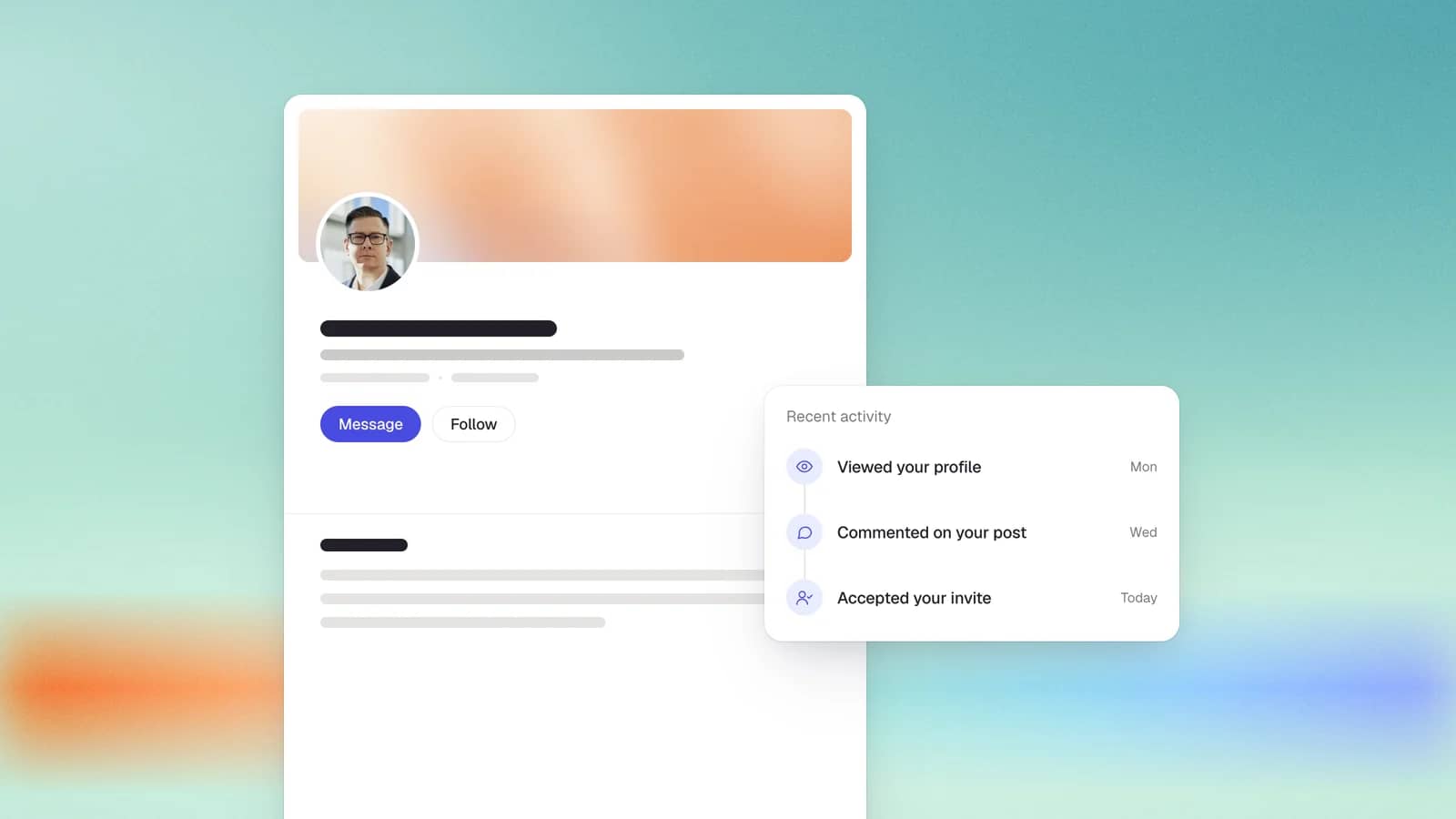
This is what replaces volume. Watch for the signals that someone is worth a personalized touch now: they viewed your profile, engaged with your posts, changed roles, their company raised funding, or a target account went quiet then active. Sales Navigator and social listening surface these. A signal is your permission slip to reach out with relevance.
Engage before you pitch: scripts and sequences
Lead with value, in this order.
- Engage: leave a genuinely useful comment on the prospect's post (not "great post").
- Connect: send a short, specific request that references the real reason, for example, "Saw your take on X, we are wrestling with the same thing, would love to follow your work."
- Share: once connected, keep adding value before any ask. When a pitch finally comes, it lands as a natural next step, not an ambush. Notice what these scripts never do: open with a demo request.
Move conversations to owned channels and log to CRM
A warm reply is a fragile, unowned asset until you capture it. Move genuine conversations toward a call or email, and log every meaningful social touch into your CRM. Otherwise the relationship lives only inside a platform you do not control, and the data disappears from your reporting.
A content cadence and a 15-minute daily routine
Consistency beats intensity. Publish useful content on a rhythm you can hold, and protect a short daily habit:
- 5 minutes: check intent signals (profile viewers, post engagers, role changes, target-account activity).
- 5 minutes: engage, leaving three to five thoughtful comments where your buyers already are.
- 5 minutes: send a couple of personalized, signal-based requests or advance one warm conversation, then log it to your CRM.
Done daily, that quietly compounds into pipeline. The consistency is the hard part, which is why keeping your professional brand fed without it eating your calendar is where a tool like Scripe helps: turn a two-minute voice note into a finished post so your presence never goes dark.
How to measure social selling (beyond SSI)
LinkedIn's Social Selling Index (your LinkedIn SSI score) is a useful leading indicator of whether you are doing the right activities, but it is an input, not an outcome. Optimizing your life around your SSI score is like optimizing for steps instead of fitness.
Measure what actually reflects results: conversations created, influenced pipeline, and win rate on social-sourced or social-influenced deals. Because so much happens in dark social, add self-reported attribution, the simple "how did you find us?" on the first call, which catches the influence your tracking misses.
And move your social signals into the CRM so they show up in the same reporting as everything else, rather than dying inside a platform. Sales leaders who report social selling as influenced pipeline keep their budget; those who report SSI scores do not.
Common mistakes to avoid in social selling
Let's engage the skeptical questions competitors dodge.
- Spray-and-pray and pitch slapping. Mass requests and a pitch in the first message are the fastest way to get ignored and throttled. This is the number-one mistake, and it is getting more expensive.
- Automation that spams. Automation is fine for research and reminders. Automation that auto-sends generic messages at volume is spam with a scheduler, and platforms are getting better at catching it.
- Faking authenticity. AI-generated "personalization" that is obviously templated reads as more insulting than a blank request. If you cannot say something true and specific, do not send it.
Is social selling saturated? Yes, the volume channels are, which is exactly why precision wins. Are you "allowed" to sell on social platforms? Yes, selling is permitted; spamming is not, and the platforms enforce that line through rate limits and account restrictions. Does social selling still work in 2026? It works better than ever for the people doing it well, and worse than ever for the people running the 2021 playbook. The bar moved. That is the whole story.
Conclusion: recision, Authenticity, and Presence
The easy version of social selling stoped working. The reps and teams winning in 2026 do three things differently:
- they choose precision over volume, sending fewer and sharper messages to people who actually signaled intent;
- they use AI to amplify real human insight rather than to fake it at scale;
- they show up wherever their buyers research, not just on LinkedIn.
Do that consistently, and you become the familiar, trusted name already on the shortlist by the time a buyer is ready to talk.
If there is one habit to start with, make it consistency: keep showing up with useful content and genuine engagement so your presence compounds. Try Scripe free for 7 days to turn your expertise into a

Co-Founder & CEO
Eva Johanna Egg is the co-founder and CEO of Scripe, where she helps individuals turn their genuine expertise into authentic, high-impact content. With nine years of hands-on social media building and academic grounding in engineering she brings a rare combination of practical platform experience and technical rigor to the personal branding space.
LinkedIn