Sprout Social’s new Essentials plan starts at $79/seat/mo, which sounds approachable until you read the fine print. It covers five social profiles and basic publishing. That’s it. The features that made Sprout its name, advanced listening, premium analytics, advocacy, influencer marketing, are still on higher tiers or sold as premium add-ons.
And the per-user pricing model means every person on your team, even the one who just reviews posts, triggers another full license. By the time a small team gets the features they need, they’re stuck with an enterprise price tag.
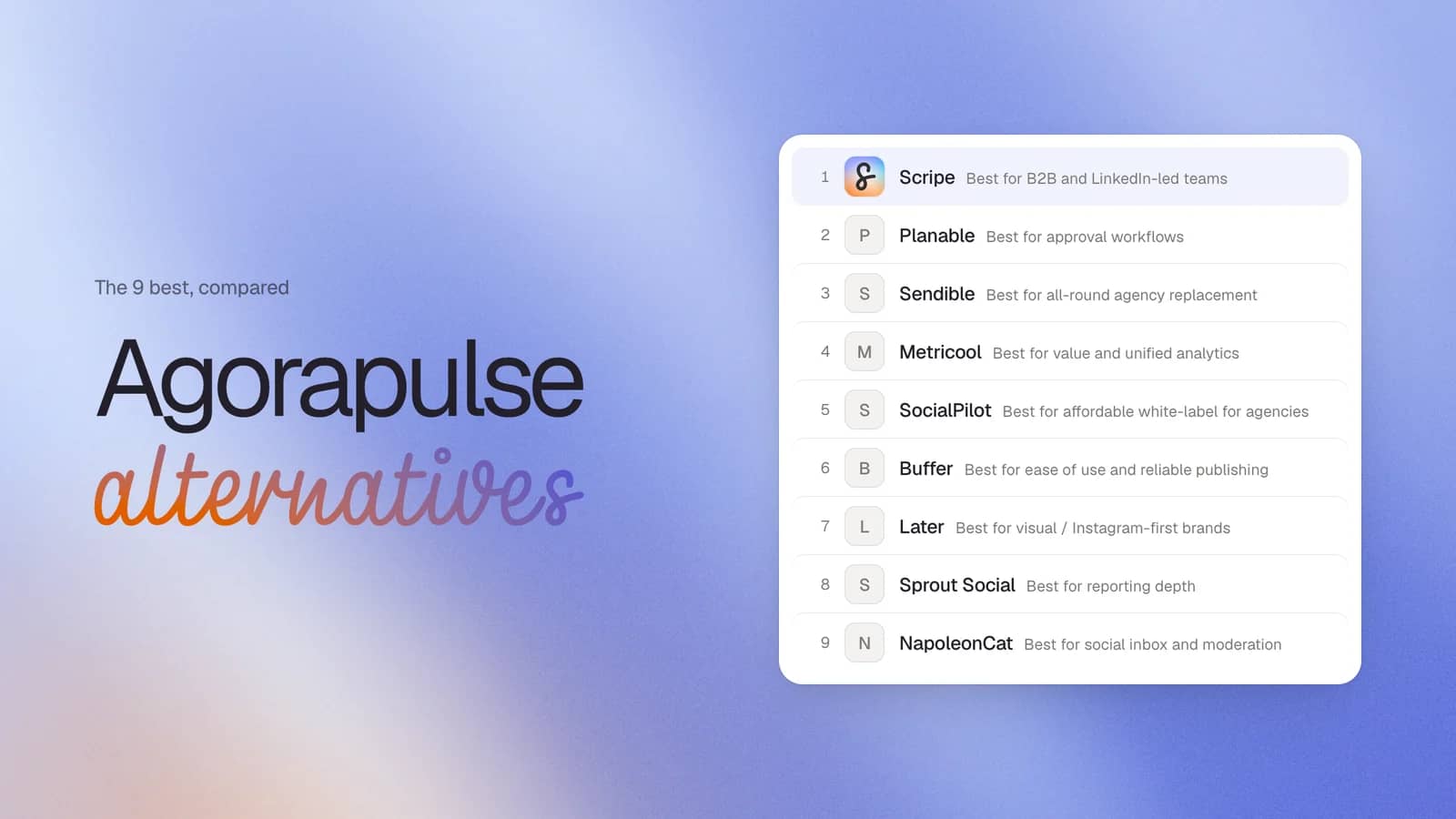
I built Scripe because I kept hearing the same thing from founders and heads of marketing. They liked Sprout. They just couldn't justify the cost for the parts they actually used. So I mapped the landscape of social media management tools, tool by tool, pricing page by pricing page. What I found is that there’s no single Sprout replacement. There are eight different social media management platforms, each solving a different reason people leave.
Why Teams Look for a Sprout Social Alternative
I don’t want to give the impression that I think Sprout is a bad tool. It isn’t. It’s a mature, feature-rich social media management platform used by plenty of reputable companies.
I went through the G2 reviews to understand why people actually leave. Not the marketing pages, the actual reviews. The complaints cluster into four main stories, and there’s a hygiene layer of smaller issues that compounds the frustration on top.
Price and per-seat cost
Cost is the single biggest complaint. One G2 user says, “It's simply too expensive for non-enterprise organizations. We employ about 40 people and having just one more user license would make such a huge difference for us.”
The extreme cost comes down to the per-user pricing model. “Having to pay a lumpsum for each additional seat when this is mostly used as an organic social performance metric, the ROI on the platform has been difficult to justify,” says a reviewer.
Many useful features are also gated to more expensive plans. “The price is high relative to the value,” a small business user mentions. “I do not appreciate that you have to upgrade for features like optimal scheduling time when that feature is available for free on the Meta platforms. Seems like they want to charge you for everything.”
Missing and restricted features
Sprout falls short at keeping up with native platform features across major social networks. This is one of the most mentioned complaints. “Sprout doesn't stay up to date with the in-platform features,” one user notes. “If I'm scheduling a LinkedIn post on a personal account I can't tag other personal accounts.”
A mid-market reviewer adds, “Especially for platforms like LinkedIn certain metrics don't actually match what is shown on the platforms back end. In addition you're unable to easily see individual engagement metrics like engagements, comments, and shares. Many of the more advanced features are also locked behind additional paywalls.”
Again, there’s a pattern of features falling short, unless you subscribe to a pricier plan.
Reporting and analytics rigidity
The reporting layer has gaps that go beyond inconvenience. “It seems like sometimes there is a lag or information left out when reporting analytics,” a mid-market G2 user mentions. “For example, this week I was looking for reporting for one of our brands and it said there was 0 engagement, although on Instagram alone we had 4 likes.”
Users also say the social media analytics reports themselves feel fixed. “More options for reporting on care metrics would be helpful,” says a social media specialist. “It would be great if we could create our own reports based on a la carte actions, rather than being limited to the standard options currently provided.”
LinkedIn depth gap
The lack of Linkedin depth is the cluster that matters most for B2B teams, and it’s the one I hear about most often from social media managers. “I focus primarily on LinkedIn, and Sprout Social doesn't have as many LinkedIn integrations due to API limitations,” a small business G2 user notes. “This makes it difficult to do listening and monitoring, which we need to do. So we have to go outside of the tool for that.”
Another user puts it bluntly, “It should have a better integration with LinkedIn for B2B customers. From post editing, schedule, and competitor reporting. Without better support for LinkedIn, there's no use for Sprout Social in the B2B space.”
Integration issues also extend to tagging. “I am frustrated by Sprout Social's inability to tag people and businesses on LinkedIn due to LinkedIn's privacy settings,” says a mid-market owner. “This limitation means I can't tag certain users unless they have followed our page or set specific privacy settings, forcing me to sometimes schedule posts directly from LinkedIn instead.”
Beyond these four clusters, there’s a hygiene layer of smaller complaints. Users report a cluttered UI and features that glitch constantly. There are also bugs that block scheduling until you reload the page. These might not be dealbreakers on their own. But for teams already feeling the pricing pressure or noticing the lack of LinkedIn features, they might be the final straw.
How I Chose Sprout Social Alternatives
I built this shortlist by examining the real reasons people leave Sprout, not from popularity or partnerships.
Value-driven pains like cost, reporting, publishing, engagement, listening, simplicity, agency customization, and B2B/LinkedIn each define a type of switcher with a different best-fit tool. Hygiene pains like bugs, disconnections, speed, and contract friction are caveats applied to individual tools where relevant.
Every pick had to solve a specific, named Sprout pain from the review data and beat Sprout clearly on that one job. Every entry includes where the tool is weaker than Sprout. Every price was verified in September 2026. These rates do change constantly, so confirm before you buy.
The 8 Best Alternatives to Sprout Social at a Glance
There’s not a single unicorn tool that’s going to be the best fit for every team. Take a look at this table, pick a few that match your needs, and read their full reviews below.
| Tool | Best for | Pricing model | Starting price | Standout strength | Where it’s weaker |
|---|---|---|---|---|---|
| Scripe | B2B teams running social-led growth | Per LinkedIn account | €69/mo | LinkedIn-native system with pipeline tracking | Not for Instagram, TikTok, or broad consumer social |
| Buffer | Small teams on a budget | Per channel | $6/mo | Genuine free plan, no per-seat fee | No listening, shallow analytics |
| Metricool | Unified paid + organic analytics | Per brand | €16/mo | Paid and organic in one dashboard, free plan | Clunky UI, X is a paid add-on |
| Later | Visual and creator publishing | Per Social Set | $25/mo | Grid preview, reliable story scheduling | Inbox gated to higher tiers, limited collaboration |
| Vista Social | Multi-network engagement | Flat within a tier, profile-bundled | $79/mo | Unified inbox across wide networks | Listening and advocacy are add-ons |
| Brandwatch | Deep social listening | Custom enterprise | Contact sales | Boolean queries, deep historical data | Custom pricing, no self-serve trial |
| Planable | Simple approval workflows | Per workspace | $39/mo | Best-in-class approvals, unlimited users | Analytics and inbox are thin add-ons |
| Sendible | Agencies, white-label | Per profile/workspace | $35/mo | White-label reports, unlimited users | No grid planner or link-in-bio, top tiers pricey |
#1 Scripe: Best for B2B teams running social-led growth
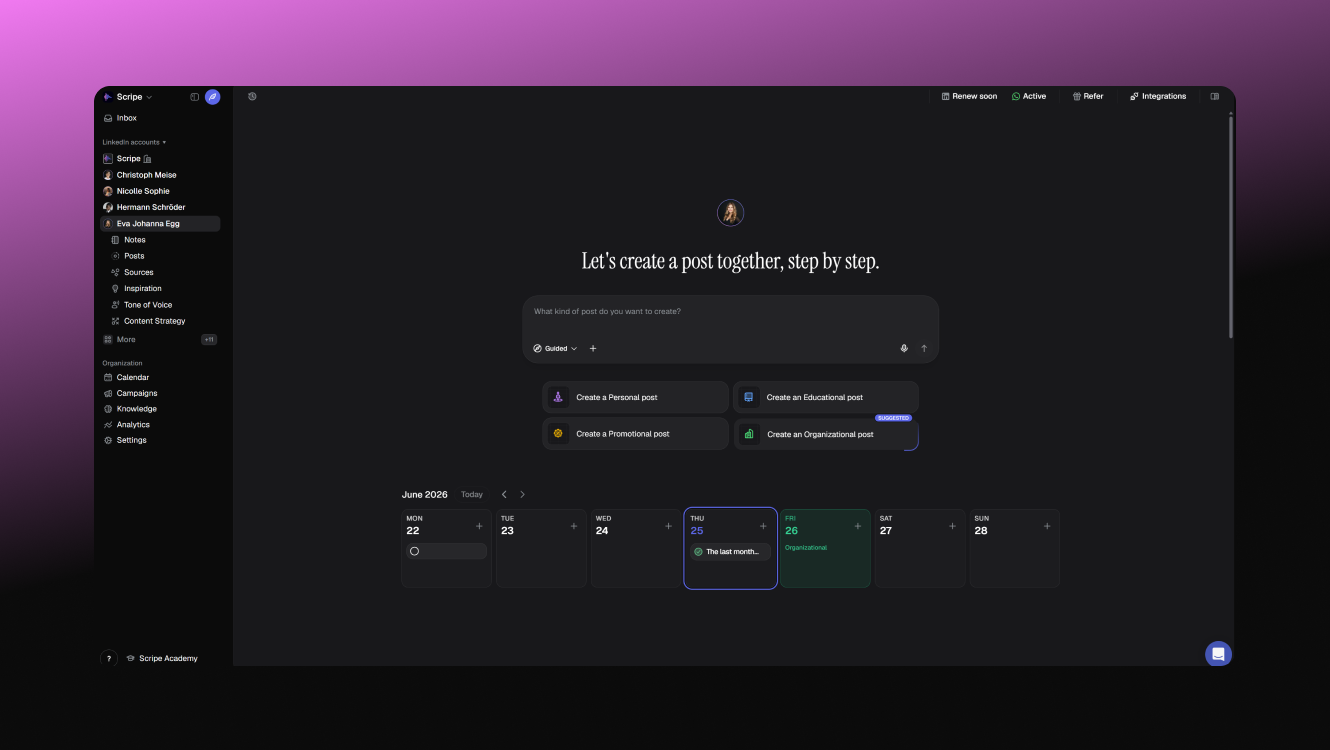
Scripe is the company I co-founded, so I’ll own that upfront. It’s a social content management systme built for B2B teams and agencies who treat social as a growth and pipeline engine. If your center of gravity is LinkedIn and the people on your team posting matters more than the company page alone, this is the social media management tool built for you.
Solves Sprout’s LinkedIn depth gap: Sprout’s LinkedIn support is weak due to API limitations, and it sells employee advocacy as a separate paid module. Scripe connects through LinkedIn’s official Community Management API as an approved developer partner. That means there’s no Chrome extension, no password sharing, and no ban risk. Advocacy is built into the core workflow.
Why Scripe is a strong alternative
Where Sprout manages brand profiles broadly, Scripe runs B2B social as a system with LinkedIn at the center.
- It publishes across the company page, executives, and employees from one place.
- Content strategy and post generation are backed by performance data from roughly 10 million LinkedIn posts, with a voice trained per profile so posts sound like the person, not generic AI. Our LinkedIn content strategy guide is a good primer if you’re starting from scratch.
- Employee advocacy is built into the core workflow with questions and approvals, not sold as a separate add-on.
- One analytics dashboard covers all accounts, with link tracking for revenue attribution.
Where Scripe is weaker than Sprout
Scripe is deliberately B2B and LinkedIn-first. It’s not for Instagram, TikTok, or broad multi-network community management. If you need to manage 10 networks at once or publish posts across other platforms, a broad suite is the better fit.
Pricing
| Plan | Monthly | Best for |
|---|---|---|
| Solo | €69/mo | Solo founders and creators growing a LinkedIn presence and turning it into clients |
| Advanced | €99/mo (first account) | Small teams that draft, review, and ship LinkedIn content as a group |
| Business | €149/mo (first account) | Businesses running LinkedIn as a strategic pipeline engine |
Scripe’s pricing model is per connected LinkedIn account rather than per seat. It also offers a seven-day free trial.
Bottom line: Pick Scripe if LinkedIn and pipeline are the point, and pick a general suite if breadth is.
#2 Buffer: Best for small teams on a budget
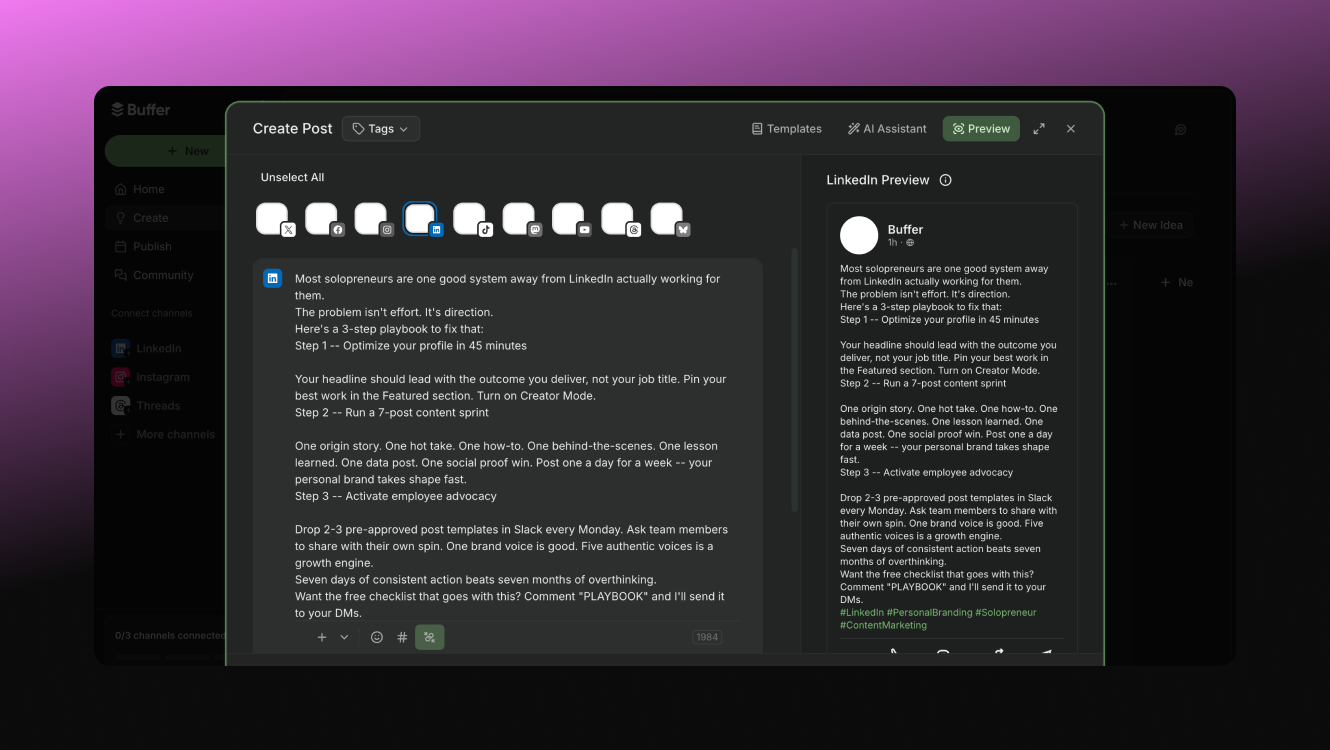
Buffer is a lightweight, no-frills social media scheduling tool with one of the cleanest interfaces in the category. It charges per channel, not per seat, and has a free forever plan. If your biggest scripe with Sprout is the price tag, then Buffer is where most teams head next.
Solves Sprout’s price and per-seat cost: Sprout’s per-seat model causes your bill to scale with headcount, and it’s the number one complaint. Buffer flips that model entirely by charging per channel, not per seat, so adding a person won’t increase your bill.
Why Buffer is a strong alternative
- It charges per channel, not per seat, so paid plans start from $6/month, over 30 times cheaper than Sprout’s Standard plan, and the rate drops as you add more channels, with no per-user fee.
- It offers a usable free plan with 3 channels and 10 posts each, no time limit, where Sprout only offers a trial.
- It has transparent public pricing with no forced enterprise quote.
Where Buffer is weaker than Sprout
- It has no social listening.
- Its analytics are shallow since it’s a scheduler, not a suite.
- It has occasional channel disconnections that need re-auth.
Pricing
- Free: 3 channels and up to 10 scheduled posts per channel
- Essentials: $6/channel/mo
- Team: $12/channel/mo
Bottom line: Buffer is the go-to for 1–8 channels on a budget, but you’ll outgrow it when you need more depth.
#3 Metricool: Best for unified paid + organic analytics

Metricool is an analytics-led social management platform that combines scheduling, competitor tracking, and reporting. It charges per brand, not per seat. If you’re leaving or reconsidering investing in Sprout Social because you can’t prove ROI or unify paid and organic in Sprout, this is the tool that does that better. And it does it at a fraction of the cost.
Solves Sprout's reporting and analytics rigidity: Sprout’s reports feel fixed, you can’t unify paid and organic in one view, and the data doesn't always match native platform numbers. Metricool puts paid and organic data in the same dashboard, so you can justify the cost without exporting to a second tool.
Why Metricool is a strong alternative
- It unifies paid and organic reporting, so Meta, Google, and TikTok Ads data sit in the same dashboard as your organic numbers.
- It offers customizable report templates with PDF and PowerPoint export.
- It includes competitor tracking for up to 100 profiles, plus best-time heatmaps.
Where Metricool is weaker than Sprout
- The UI feels clunky and dense.
- Real-time analytics require a paid add-on, and social analytics aren't real-time by default.
- Reviewers have flagged an opaque auto-renewal policy.
Pricing
- Free: Free but doesn’t include LinkedIn or X
- Starter: From €16/month
- Advanced: From €43/month
- Custom: Custom
Bottom line: Metricool is the best value for teams whose leaving reason is “I can't prove ROI or unify paid and organic in Sprout.”
#4 Later: Best for visual and creator publishing
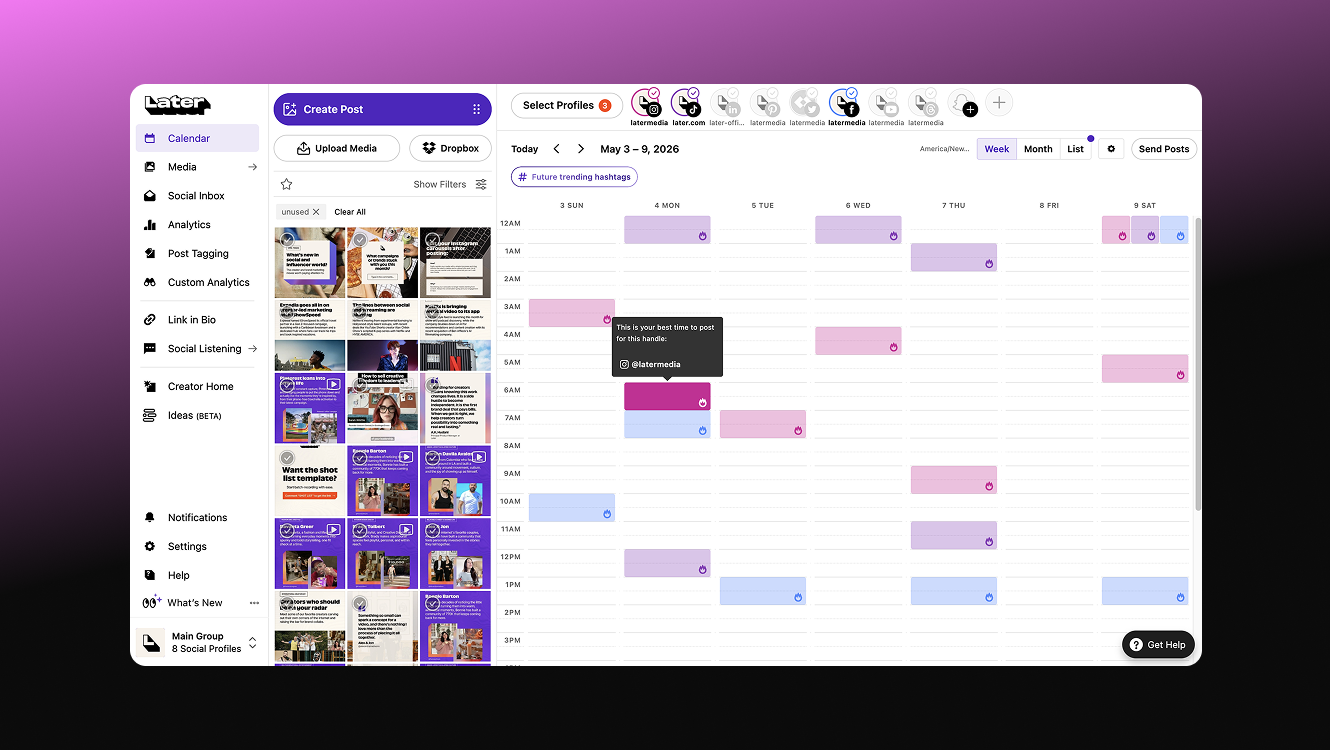
Later is a visual-first publishing tool built around a drag-and-drop calendar, a media library, and Linkin.bio, with deep Instagram and TikTok support. If your work centers on visual content creation and you're leaving Sprout over clunky publishing workflows, this is the fit.
Solves Sprout’s missing and restricted features: Sprout doesn’t stay up to date with in-platform features, so you can’t include sounds on TikTok, mix video and photo on Instagram, or tag personal accounts on LinkedIn. Later is built around those workflow gaps. It has a reusable media library and reliable Stories and Reels scheduling.
Why Later is a strong alternative
- It offers a reusable media library, which is the thing the reviewer missed when they left Later for Sprout.
- It has a visual drag-and-drop calendar with an Instagram grid preview for early-stage planning.
- It includes a mature Linkin.bio tool, and it's an official Instagram partner.
Where Later is weaker than Sprout
- Its social inbox is gated to higher-tier plans, and its analytics won’t satisfy enterprise reporting needs.
- Its pricing per Social Set gets expensive across multiple brands.
- You can’t add additional users to the base plan, which limits team collaboration for growing teams.
Pricing
- Starter: From $25/mo
- Growth: From $50/mo
- Scale: From $110/mo
Bottom line: Later is for you when the leaving reason is clunky story scheduling, no media library, or weak visual planning.
#5 Vista Social: Best for multi-network engagement
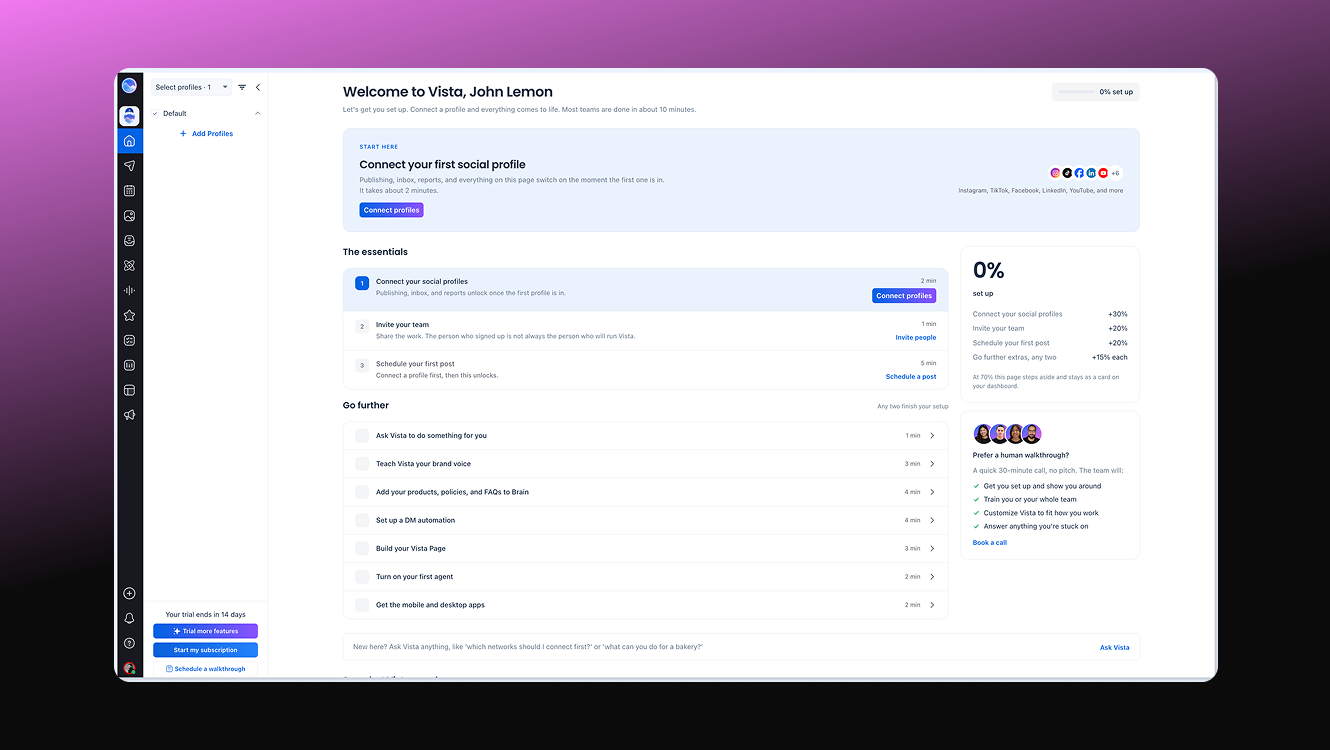
Vista Social is a broad, flat-priced all-in-one social media management software with a strong unified social inbox, DM automations, and unusually wide network coverage. If you’re always in your inbox and need to engage across many networks, including ones Sprout handles weakly, this is the pick for you.
Solves Sprout’s missing features across networks: Sprout doesn’t always keep up with native platform features. Vista Social covers more networks, including Reddit, Snapchat, Threads, Bluesky, and Pinterest, and its unified inbox handles comments, DMs, mentions, and reviews.
Why Vista Social is a strong alternative
- It includes trigger-based DM automations that reply to comments and messages on autopilot.
- It covers networks Sprout handles weakly, like Reddit, Snapchat, Threads, Bluesky, Pinterest, and Google Business.
- It uses flat pricing with no per-seat charge, so Professional is $79/mo for 15 profiles and 2 users.
Where Vista Social is weaker than Sprout
- Deeper social media listening and employee advocacy are paid add-ons.
- It has a learning curve from the sheer feature breadth.
- Unlike Sprout Social, it doesn’t have that enterprise polish.
Pricing
- Professional: From $79/mo (2 users)
- Advanced: From $149/mo (4 users)
- Scale: From $379/mo (8 users)
- Enterprise: Custom
Bottom line: Vista Social is the strongest mid-market pick when engagement depth and network breadth are your reasons for leaving Sprout.
#6 Brandwatch: Best for deep social listening
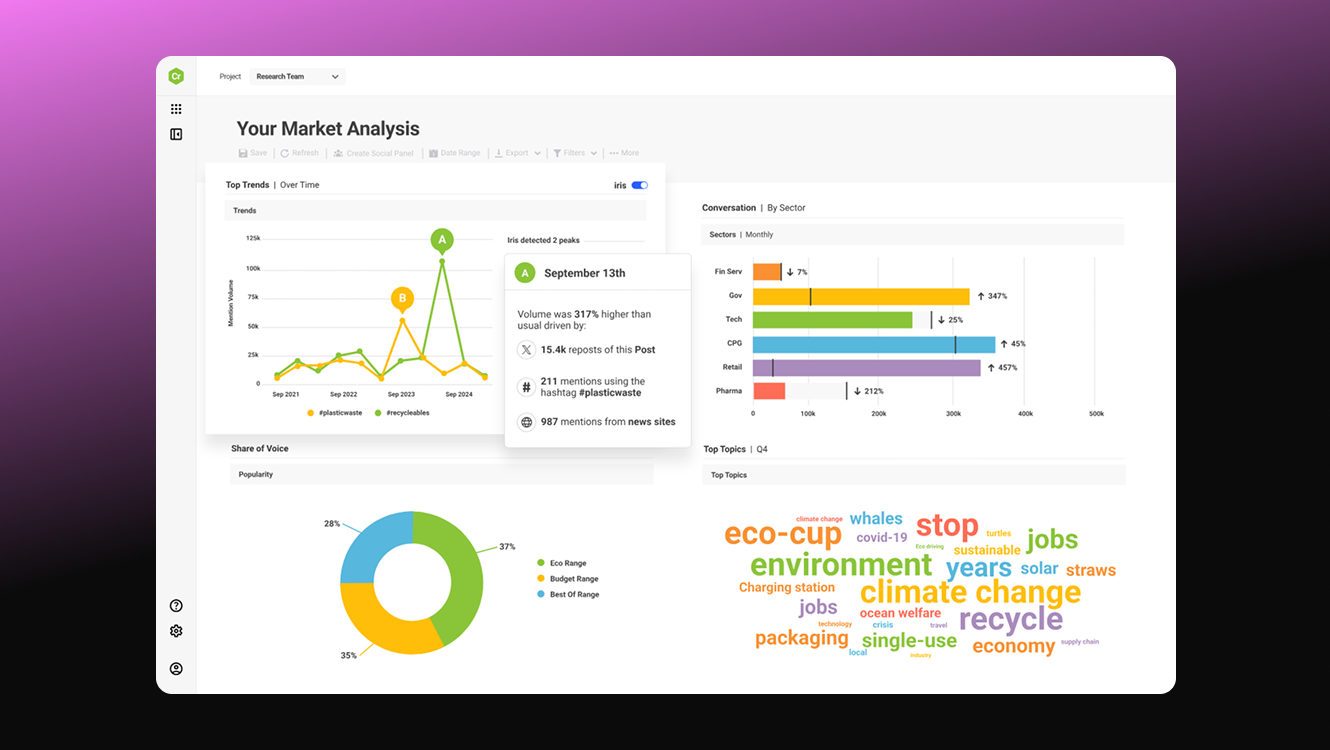
Brandwatch is an enterprise consumer-intelligence and advanced social listening platform built for deep analysis rather than publishing. It’s a complement, not a full replacement, for Sprout. Brandwatch handles the Boolean queries, historical data, and sentiment analysis that Sprout’s social listening add-on can't.
Solves Sprout’s shallow listening: Sprout’s bolt-on listening can’t replace a dedicated tool, with weak query depth and limited coverage. Brandwatch is a purpose-built consumer-intelligence platform that handles all the things that Sprout’s listening layer can’t match.
Why Brandwatch is a strong alternative
- It offers flexible Boolean queries and deep analytics with historical data.
- It includes sentiment analysis plus forums, blogs, and web coverage.
- It has an Iris AI layer for search, analysis, and summarization.
Where Brandwatch is weaker than Sprout
- Its strength is listening, not publishing, so most teams add it alongside a scheduler rather than replacing one.
- It uses custom pricing with no public rates, and the entry point is steep enough that it's out of reach for small teams.
- It has no self-serve trial, so you book a meeting with sales.
Pricing
- Consumer Intelligence: Custom
- Social Media Management: Custom
- Influencer Marketing: Custom
Bottom line: Buy Brandwatch as the listening layer if that’s your biggest gap, and keep a scheduler for everything else.
#7 Planable: Best for simple approval workflows
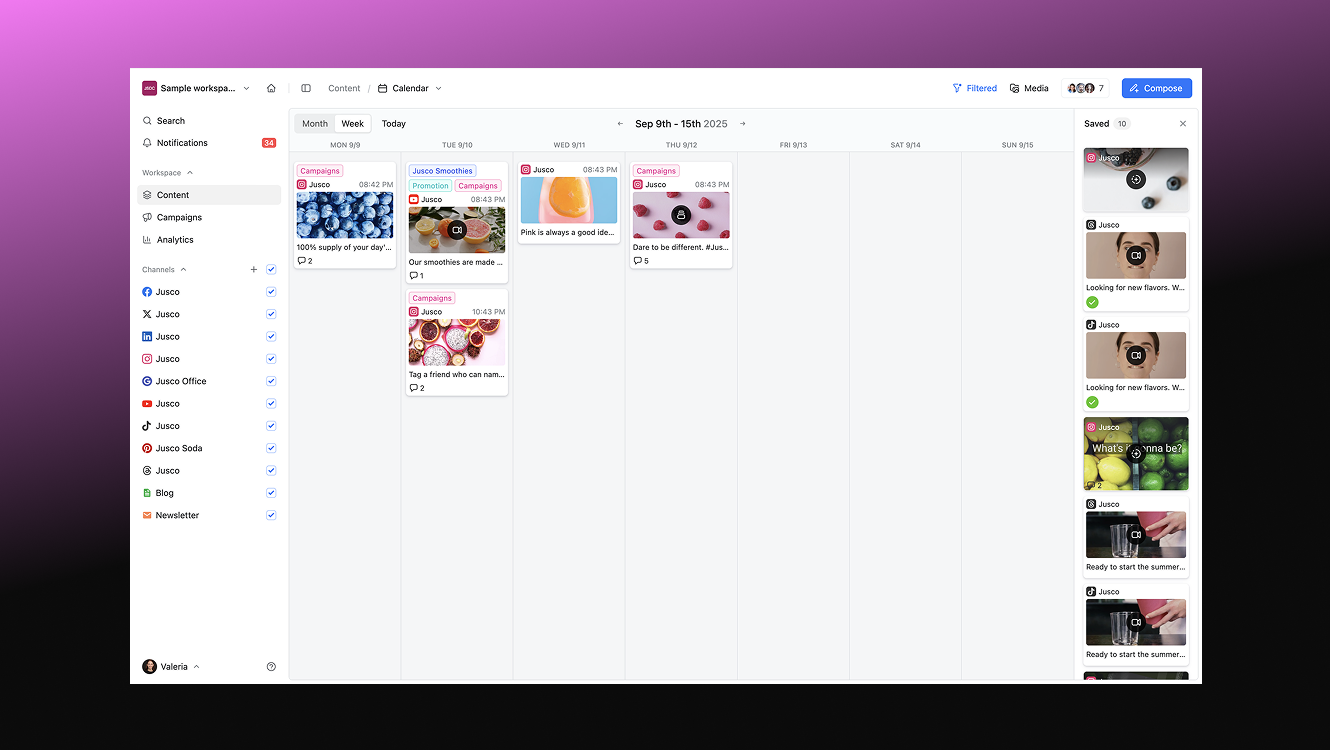
Planable focuses on collaboration tools and approval workflows. It has a clean interface, visual previews, and per-workspace pricing with unlimited users. If your biggest bottleneck is content review and sign-off, not analytics, this is the fit.
Solves Sprout’s cluttered menus and approval-seat cost: Sprout’s UI is cluttered enough that one user said they had to delete a drafted post and start over, and the approval process itself needs an extra paid seat. Planable is priced per workspace with unlimited users, so the person reviewing content doesn’t trigger a per-seat charge.
Why Planable is a strong alternative
- It offers visual post previews showing how content will look per platform.
- It has one of the best multi-stage approval workflows with one-click client sign-off.
- It’s priced per workspace with unlimited users, which supports strong team collaboration features.
Where Planable is weaker than Sprout
- Analytics, listening, and the engagement inbox are thin or paid add-ons.
- A “post” is consumed per channel, even for drafts, so lighter posting adds up.
- Per-workspace cost adds up for agencies managing multiple brands.
Pricing
- Basic: $39/mo/workspace
- Pro: $59/mo/workspace
- Enterprise: Custom
Bottom line: Planable is ideal when collaboration and approvals are your pain rather than analysis or listening.
#8 Sendible: Best for agencies
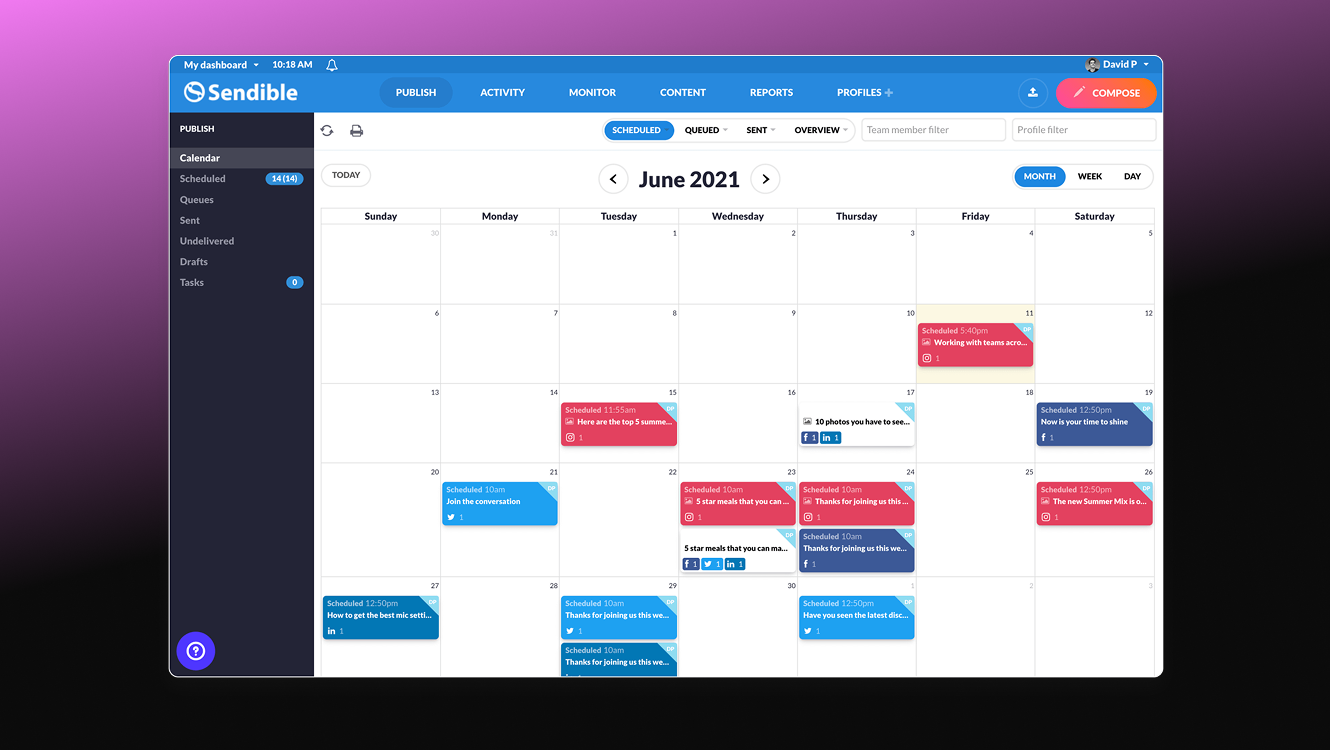
Sendible is an agency-oriented social media management platform built around white-label reporting, custom client workflows, and multi-client management. It charges by profile count and includes unlimited users on every plan. If you’re an agency managing multiple clients that needs branded reports and structured approval flows, this is a great option.
Solves Sprout’s workflow rigidity and fixed reporting: A lot of reviews named Sprout’s customization and workflow rigidity, tagging failures, and contract friction. Sendible has white-label reports and custom client approval flows to satisfy agency requirements better than Sprout.
Why Sendible is a strong alternative
- It offers white-label reports and dashboards with your own branding and domain.
- It includes 250-plus report modules with custom dashboards, which fixes user complaints about Sprout’s reports.
- It has custom user access and structured client approval workflows.
Where Sendible is weaker than Sprout
- It lacks an Instagram grid planner or visual feed preview.
- It has no link-in-bio tool, a feature Sprout includes natively.
- Its listening is lighter, and the top tiers get pricey.
Pricing
- Core: From $35/mo
- Plus: From $99/mo
- Premium: From $199/mo
- Elite: From $299/mo
- Enterprise: From $750/mo
Bottom line: Sendible is the choice for growing agencies pick and white-label depth. If you want the honest budget substitute, look at SocialPilot, which offers approval workflows on all plans, cheaper white-label, and unlimited users at the top tier for $200/mo flat.
How To Choose the Right Sprout Social Competitor
I’ve given you my honest take on the landscape of Sprout Social competitors. Here’s how I’d recommend turning it into a decision for your entire social media strategy.
- Price and per-seat cost: Buffer (or Scripe if LinkedIn is your only network)
- Missing and restricted features: Later
- Reporting and analytics rigidity: Metricool
- LinkedIn depth gap: Scripe
- Cluttered menus and clunky approvals: Planable
- Agency white-label: Sendible
Here’s a question to ask yourself: How many of Sprout’s six core modules do you really use out of publishing, engagement, analytics, listening, advocacy, and influencer marketing tools?
If the answer is two out of six, that means you need a point solution, and one of the tools above will serve you better for less. Four out of six means you’re looking at a stack, so you might be better off staying with Sprout.
Why Teams Choose Scripe
If you read the LinkedIn depth or per-seat pricing cluster and thought “that’s us,” let me make the argument for Scripe even clearer.
The clusters above each point to a different tool. But the LinkedIn depth gap is the one I built Scripe to solve. The reviewer who said “there's no use for Sprout Social in the B2B space” is the exact kind of user I had in mind when we started.
You’ve already read the tool review, so I won’t repeat the feature list. What I'll say here is why the motion matters, not just the features.
In B2B, the people-led motion outperforms the company page. Your executives and employees posting in their own voice reaches more buyers than your company page ever will. LinkedIn’s own data shows employees collectively have 10 times more first-degree connections than their company has followers, and personal profiles generate a 63% higher engagement rate than company pages.
No amount of features a platform offers can help you take advantage of this unless you start with a change in strategy. Scripe is built for that strategy shift, with the company page, executives, and employees in one system, advocacy in the core workflow, and reporting that ties social media posts to pipeline.
If that’s your motion, start your seven-day free trial today.
FAQs

Co-Founder & CEO
Eva Johanna Egg is the co-founder and CEO of Scripe, where she helps individuals turn their genuine expertise into authentic, high-impact content. With nine years of hands-on social media building and academic grounding in engineering she brings a rare combination of practical platform experience and technical rigor to the personal branding space.
LinkedIn